

At CLBC, listening to and learning from lived experience plays an important role in shaping how support is delivered. It helps ensure services reflect the real needs of individuals and families.
Across British Columbia, five Service Delivery Advisors bring that lived experience into their work at CLBC every day. Each brings their own perspective and experiences, helping CLBC better understand the people it serves.
Through their work, they support staff learning, raise awareness about inclusion and accessibility in their communities, and help improve how CLBC services are delivered. Here, they share their stories and the impact they are making across the province.
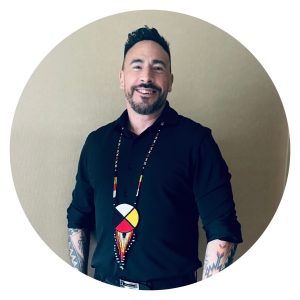
Myles Himmelreich, Service Delivery Advisor
Myles Himmelreich
Myles Himmelreich brings more than 20 years of experience working in the field of Fetal Alcohol Spectrum Disorder (FASD) to his role as a Service Delivery Advisor at CLBC. Before joining CLBC, he led mentoring and self-advocacy groups and presented across Canada to educators, professionals and families. His work is rooted in sharing his own story with FASD and helping others better understand diverse learning needs.
For Myles, his role is about using his experience to help shape how CLBC supports people. He has led FASD Awareness Month activities and develops and delivers training for staff. He also takes part in learning initiatives like CLBC’s Welcome Workshops.
He encourages staff to think carefully about how they communicate and how information is received. “This role allows me to show my strengths. It’s made me feel that I’m smart and capable, and that I’m making a change.”
One resource Myles often shares is CanFASD, a national organization that provides research, tools, and information about FASD. He highlights their language guide as especially helpful. For Myles, sharing resources like this helps reduce stigma and build understanding.

Michelle Goos, Service Delivery Advisor
Michelle Goos
Michelle Goos brings a strong focus on advocacy to her role as a Service Delivery Advisor at CLBC. Before stepping into this role, she worked on contract with CLBC to support the design of the CLBC L.I.F.E. Service and Welcome Workshops, helping shape how information is shared with individuals and families. She is now full-time and based in the Victoria office.
For Michelle, one of the things she is most proud of is being able to offer insight into how individuals and families may be thinking and feeling. Colleagues often come to her with questions about how best to support someone, and she helps them think through different approaches.
Michelle is also a published author whose research focuses on parenting with a disability. She continues to present to organizations and facilitate focus groups, creating space for parents to share their experiences. “Don’t be afraid to say that you’re a parent with a disability,” she says.
She encourages individuals and families to explore her research through the Canadian Institute for Inclusion and Citizenship, where they can find information and insights from parents with lived experience.
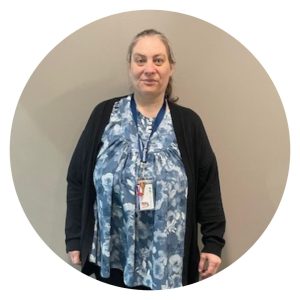
Shelley DeCoste, Service Delivery Advisor
Shelley DeCoste
Shelley DeCoste has been working with CLBC since 2013 and was part of a group of self-advocates who encouraged the organization to “walk the talk” by hiring people with lived experience.
In her role, Shelley focuses on making information easier to understand and supporting people to speak up for themselves. She helps ensure CLBC documents are written in plain language so people can understand what is being shared. She also supports individuals during meetings, so their voices are heard and decisions reflect what they want.
Shelley is especially passionate about working with youth who are transitioning into adulthood. She helps them build confidence and learn how to advocate for themselves.
“People with diverse abilities are used to having others speak for them,” she says. “I want them to feel comfortable using their own voices.”
She encourages individuals and families to explore selfadvocate.net to find self-advocacy groups across B.C. and get involved in their communities.

David Johnston, Service Delivery Advisor
David Johnston
David Johnston has been a Service Delivery Advisor with CLBC for more than 10 years. He first started in a part-time role and helped advocate for it to become full-time, recognizing the importance of the work. Based in northern B.C., he supports a large and diverse region.
In his role, David develops and delivers training for new staff and co-hosts CLBC’s Water Cooler Talks, an internal learning series where staff come together to share ideas and learn from one another. He also connects with service providers and community partners across his region to better understand local needs.
Improving accessibility is an important part of David’s work. As a member of the CLBC Accessibility Committee, he helps identify barriers and contribute to changes that make CLBC services more accessible.
“I got hired because I have lived experience, and I can help educate CLBC on different issues,” he says. “I can help CLBC support people to have better lives.”
He encourages people to learn more about neurodiversity and to connect with organizations like BC People First and CLBC’s Community Councils that support self-advocacy and community connection.

Christian Burton, Service Delivery Advisor
Christian Burton
Christian Burton brings lived experience and a strong commitment to inclusion to his role as a Service Delivery Advisor at CLBC. For him, the role is a full-circle moment, moving from receiving services to helping shape how they are delivered.
In his role, Christian supports staff learning and connects with individuals and families in the community. He takes part in CLBC’s Welcome Workshops and supports staff learning through Water Cooler Talks, an internal learning series. He also attends community events, including youth transition fairs, where he speaks with individuals and families about accessing CLBC services and what to expect.
“Seeing how much people thrive with the right supports brings me joy every day,” he says.
Christian highlights Special Olympics as a meaningful way for people to build confidence, form friendships, and feel connected. He encourages others to get involved, whether by participating or volunteering.