

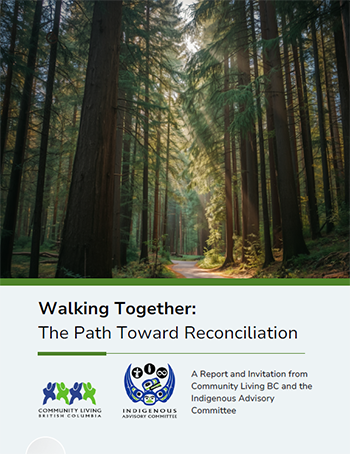
 Community Living BC (CLBC) and the Indigenous Advisory Committee (IAC) are marking an important milestone in the shared journey toward reconciliation with the release of Walking Together: The Path Toward Reconciliation.
Of the 30,000 people served by CLBC, 14 percent identify as Indigenous. While there are many inherent strengths within Indigenous individuals, families and communities, there continues to be systemic challenges and obstacles to receiving necessary services. The barriers that Indigenous people with disabilities often face can leave them disconnected from services, supports and opportunities for full participation in their communities.
The report highlights activities from 2022 and 2025 to address those issues. It describes years of relationship-building, learning, and collaboration with Indigenous communities across British Columbia in a manner consistent with B.C.’s Declaration on the Rights of Indigenous Peoples Act.
Guided by the voices and wisdom of the IAC, CLBC has strengthened its commitment to ensuring Indigenous people with developmental disabilities and their families receive culturally safe, inclusive, and responsive supports.
“Over the past three years, we have made meaningful progress together with the Indigenous Advisory Committee, Indigenous governments, communities, partners, and allies to strengthen relationships and embed reconciliation into how CLBC works. This report reflects that progress. While we are proud of what has been accomplished, we know this work is ongoing and requires continued listening, learning, and shared accountability,” said Joanne Mills, vice-president of quality services and Indigenous relations for CLBC and a member of Fisher River Cree Nation with ties to Skidegate.
The report highlights several significant achievements, including amendments to the Community Living Authority Act that formally recognized the Indigenous Advisory Committee within CLBC’s governance structure, historic partnership agreements with Indigenous organizations, and initiatives that support Indigenous-led service delivery.
The report also showcases projects such as culturally grounded housing, Indigenous youth transition supports, and the Honouring People and Place initiative, which has brought Indigenous artwork and territorial acknowledgement ceremonies to CLBC offices across B.C.
“While we are pleased to celebrate progress, reconciliation is ongoing work. CLBC and the IAC appreciate that meaningful change requires sustained commitment, accountability, and authentic partnerships,” said Rona Sterling Collins, acting chair of the IAC. “Together, we hope to continue to work with Indigenous communities, organizations, families, and self-advocates to help shape the next chapter of this work.”
The report serves not only as an update, but also as an invitation to continue walking together. CLBC and the IAC seek to create a future that fully honours the right of Indigenous people with disabilities to self-determination while ensuring they are fully included, supported, and connected within their communities.