

Jeremy and other members of the British Columbia Community Asset Mapping Network (BCCAMN) use community mapping as a tool to help build connections that increase inclusion and belonging for all people. Learn more by visiting: www.BCCommunityAssetMapping.com
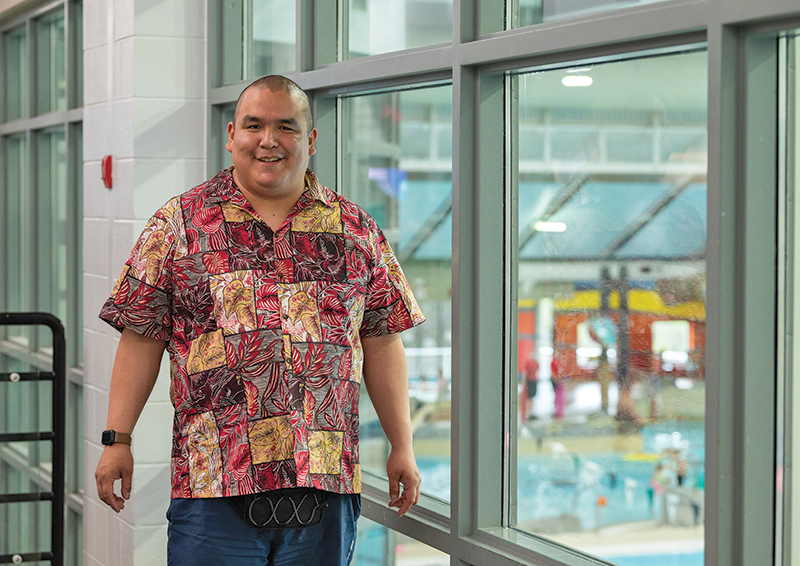
Jeremy Chester loves to visit the Commonwealth Pool in Victoria, “I like coming. I like the wave pool, the gym and the library.”
He loves it so much in fact, that he goes five days a week. When asked what makes the place welcoming, he has a quick reply, “The friendly staff, and the library is good. I like the pool and everything is awesome.”
Jeremy echoes what many people with diverse abilities have told CLBC, that going to community and government spaces can be stressful. But when the people you meet are friendly, it helps to reduce barriers, make people feel safe and make them feel they belong.
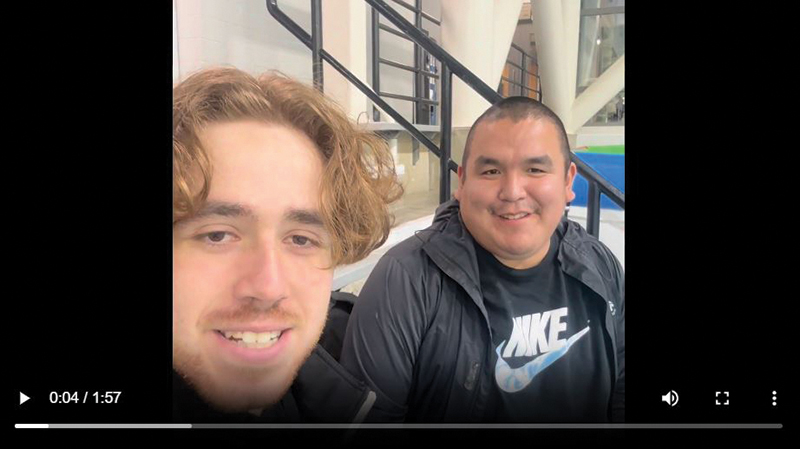
Now Jeremy is part of the team creating a community map of places people who live with disabilities feel welcome and included in the Victoria area. He works with mapper Sam Mason, and together they visit sites and create video recordings that explain why people feel a place is inclusive.
“Jeremy has been amazing in leading the charge,” says Sam. “We are working to collect stories, and he is assisting and making sure questions represent real concerns people have about the community, places that are inclusive, and why they are inclusive.”

The logo of the British Columbia
Community Asset Mapping Network
(BCCAMN).
The project, funded by a grant from CLBC for a project called “Common Ground: BC Community Asset Mapping Network”, is hosted by Victoria’s Community Social Planning Council and is set to wrap up this spring.
Says Shelley Cook, Executive Director, “We are a central hub and this work is a logical fit. As a council, we are very connected to what is going on in the community. We are facilitating research identifying how people connect to spaces, identifying gaps and working to fill those.”
Shelley says it is a way to elevate the voices of people that matter, and do it in a way that’s not artificial but natural, and invites a higher level of engagement. “This approach is empowering to people, helps them feel more connected and more honoured in those places.”
Jeremy loves this mapping and video work with Sam. He says he loves meeting new people, and hopes it will help other people with disabilities.
The project has identified more than 125 places so far in the community, coming from people with disabilities, and also from community members at large. The working draft of the map can be found here.
Also on the site will be videos, handouts and guides to show how other groups and self-advocacy leaders can map their community resources, needs and opportunities step-by-step. The hope is to revive a broader provincial effort that was started in 2017 by a network of CLBC Community Councils, family and self-advocacy leaders, CLBC staff and community partners like the Greater Victoria Public Library. Together, they asked: What if we could map and share the places in our communities that truly feel welcoming for everyone? With the help of the Family Support Institute of BC, they created the myCommunity BC mapping platform. To see the map, visit: www.findSupportBC.com/map
Visit the BC Community Asset Mapping Network to join Jeremy and others using community mapping as a way to connect people to their communities and to each other.
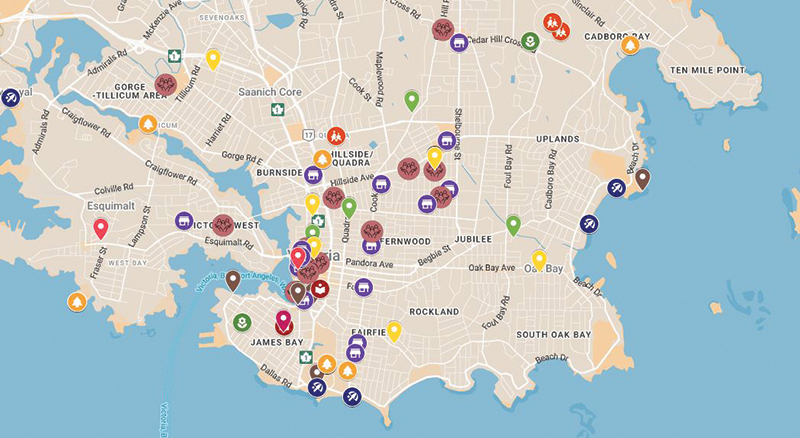
The Victoria Connections Map uses icons to show welcoming places and spaces in the community.